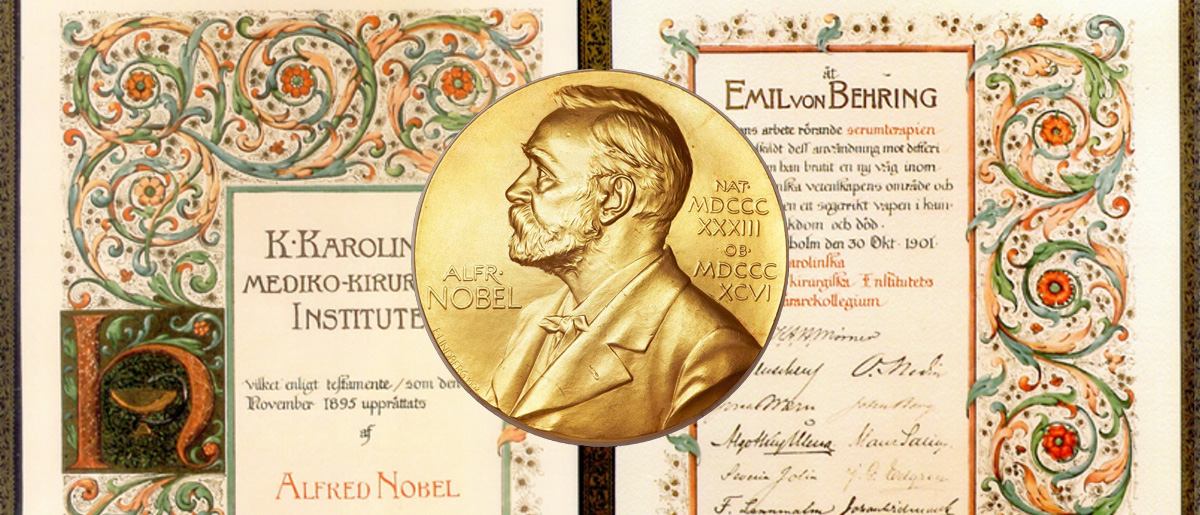
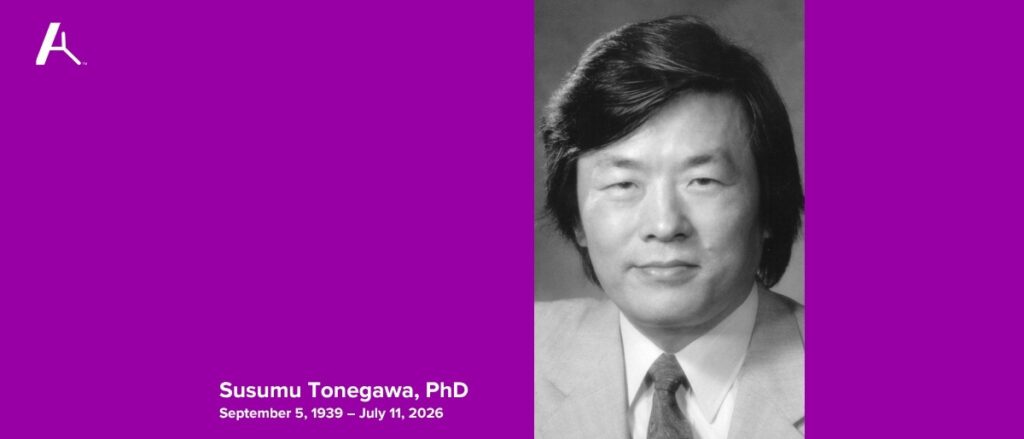
Susumu Tonegawa, PhD, who won the 1987 Nobel Prize in Physiology or Medicine for “his discovery of the genetic principle for generation of antibody diversity,” died on July 11, 2026, at the age of 86. Dr. Tonegawa was the Picower Professor of Biology and Neuroscience at the Massachusetts Institute of Technology, where he was on the faculty for more than 40 years.
Career
Tonegawa was born on 1939 in Nagoya, Japan, and grew up in many small provincial towns in the southern part of the country as his father, an engineer for a textile company, moved from one factory to another. His family sent him to Tokyo for high school, after which he entered the University of Kyoto, majoring in Chemistry. In his senior year, papers by François Jacob and Jacques Monod on the operon theory inspired him to study molecular biology for his graduate work.
Tonegawa completed his PhD in 1968 at the University of California, San Diego. He completed postdoctoral fellowships at USCD and at the Salk Institute. When Tonegawa’s U.S. visa was about to expire at the end of 1970, Niels Jerne offered him a two-year contract at the newly established Basel Institute for Immunology. Switzerland is where he began focusing on immunological research, including his Nobel-winning discovery. He also joined AAI from Basel, in 1980.
In 1981, Salvador Luria brought Tonegawa to MIT, where he spent the rest of his scientific career. At MIT, he worked on T cell receptor diversity, and added neuroscience to his research portfolio. In 1994, he became the founding director of the MIT Center for Learning and Memory (now the Picower Institute for Learning and Memory). He was also the director of the RIKEN-MIT Laboratory for Neural Circuit Genetics.
Nobel-Worthy Research
Prior to Tonegawa’s groundbreaking work, the question of how a limited number of genes could produce such a vast array of antibodies perplexed immunologists. He answered this question by demonstrating that antibody diversity resulted from the rearrangement of genes in somatic cells. Since then, his findings have allowed for advancements in the areas of vaccination, organ transplantation, and the treatment of autoimmune diseases.
In a series of experiments conducted between 1974 and 1976, Tonegawa sought to determine whether an individual inherited millions of immunoglobulin genes, each responsible for producing a distinct polypeptide chain in a specific antibody, or whether the immune system rearranged genetic information during B cell development, enabling a small number of genes to produce a much larger number of antibodies.
Using newly discovered restriction enzymes to fragment DNA, he compared by hybridization the DNA of embryonic mouse cells and adult myeloma cells. Upon discovering that the immunoglobulin genes of adults were arranged differently from their arrangement in the embryonic cells, he concluded that they had been reshuffled during B cell differentiation, allowing the animal to create a wide range of antibodies. In subsequent work, he confirmed the findings by cloning and sequencing antibody-encoding genes. The process is now known as V(D)J recombination.
“The genetic side of antibody research was a complete mystery to us all when Tonegawa started his work,” said Bengt Samuelsson, president of the Karolinska Institute, when announcing that Tonegawa had been awarded the Nobel. “He was the only player in the field between 1976 and 1978. The work was truly unique.”
Long-Time AAI Member
Dr. Tonegawa was a member of AAI for 46 years. In 1988, the year after he received the Nobel Prize, he spoke at the AAI annual meeting as a Distinguished Lecturer, alongside Anthony Fauci, Philippa Marrack, and Howard M. Grey. He also published several papers in The Journal of Immunology while at MIT.
Read a remembrance of Dr. Tonegawa from his colleagues at MIT.