
Influenza B viruses (IBV) account for about 25% of yearly infections and can pose a significant risk for children. While IBV is included in current flu vaccines, our understanding of the innate and adaptive immune responses to influenza virus infection is almost exclusively based on the study of influenza A viruses (IAV).
A new study, published in The Journal of Immunology, used a mouse model to characterize immune responses in the lung to IBV B/Brisbane/60/2008 compared to IAV A/California/04/2009 between days 3 and 7 post-infection.
The research team, led by Dr. Andrea Sant, Professor of Microbiology and Immunology University of Rochester Medical School and DFAAI ’25, found that IBV elicited earlier immune responses, including production of lung inflammatory mediators, than IAV.
How is the Immune Response to Influenza B Different?
IFNγ detected in lung lysates was over 500 times greater in IBV-infected mice at day 6 relative to IAV-infected mice at day 6. This was driven by a significantly earlier recruitment of IFNγ producing CD4 and CD8 T cells that were 10-fold more abundant in IBV-infected lungs compared to IAV or naïve controls.
Interestingly, the CD4 and CD8 T cells isolated from IBV-infected lung produced IFNγ at a significantly higher abundance than those from IAV-infected lung. Researchers say the kinetics of infiltration of CD4 and CD8 T cells in response to IBV infection was unexpected, given that the IAV-specific CD4 T cell response has been shown to peak around day 10 post infection.
Additionally, data show increased Ly6C-high inflammatory monocytes, which also produce IFNγ, and higher levels of IP-10 and MIP-1B, pro-inflammatory cytokines that recruit immune cells, in the IBV-infected lung. This was accompanied by earlier clearance of IBV compared to the IAV infected lung.
“Essentially, protective immunity is generated more rapidly in response to IBV as IBV initiates an innate response to infection more quickly than IAV does, which accelerates the protective T cell response in the lung,” shared Dr. Sant.
How can Influenza Vaccines Be Improved?
Improved vaccines and therapeutic agents to prevent and treat influenza B depend on increased understanding of the innate and adaptive immune cells that localize to the site of infection and contribute to viral clearance.
“We hope that our findings will lead to research that improves understanding of the earliest events in IBV vs IAV infection within the complex cellular microenvironment of the lung, using contemporary influenza viruses,” added Dr. Sant.
Beyond expanding this work to other IAV and IBV strains, the researchers are focused on identifying the chemokine mediators responsible for recruitment of IAV and IBV specific T cells to the lung and the sites of action of these chemokines in vivo.
The full research paper can be found in The Journal of Immunology (The JI), published by the American Association of Immunologists. As one of the most highly cited journals in the field of immunology, The JI is committed to describing novel findings in all areas of experimental immunology, including basic and clinical studies.
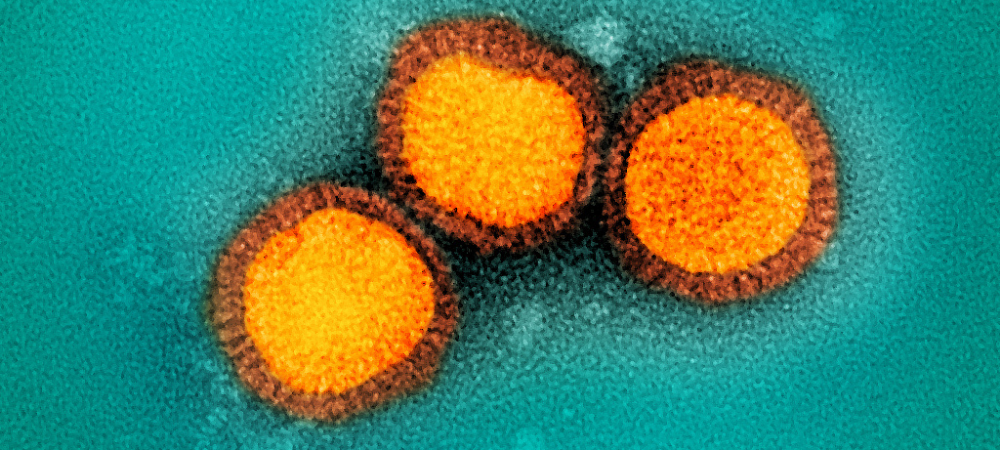
Image of Influenza B virus particles, colorized gold, isolated from a patient sample. Credit: NIAID.