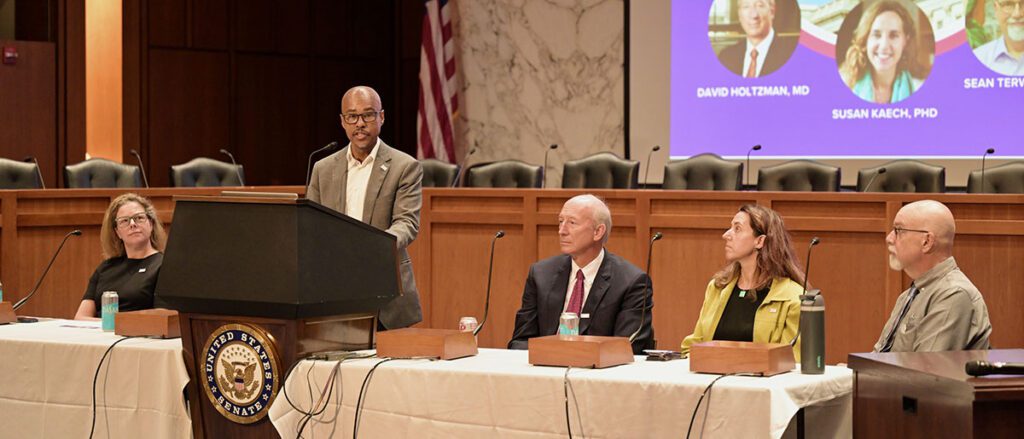
On September 2, in a hearing room of the Hart Senate Office Building, AAI held a congressional briefing to help lawmakers understand how the immune system is connected to Alzheimer’s disease. The speakers included neurologist David Holtzman, MD; immunologist and AAI vice president Susan Kaech, PhD, and Sean Terwilliger, an Alzheimer’s disease patient advocate.
The event was co-chaired by AAI President Avery August, PhD, and AAI Advocacy and Policy Core Committee Chair Marion Pepper, PhD. Staffers from congressional offices, officials from key federal agencies, and members of the media filled the hearing room, which has previously been the site of Supreme Court Justice confirmations. Representatives from UsAgainstAlzheimer’s also attended to support Terwilliger.
Immune system and Alzheimer’s disease
In his opening remarks, Dr. August explained that for decades, Alzheimer’s appeared to be a disease of the neurons, but “due to investment in research, our understanding has advanced considerably.” He stressed the centrality of immunological research to so many areas of biomedical science. “By discovering how the immune system influences health and disease,” he said, “our members continue to drive medical advances that improve and save lives.”
Introducing the speakers, Dr. Pepper reiterated both the human and financial costs of Alzheimer’s. An estimated 7.6 million Americans are living with the disease, and the long-term costs associated with it and related dementias can reach hundreds of dollars annually.
Basic research illuminates neuropathology of Alzheimer’s
The first speaker was David Holtzman, MD, a professor of neurology and director of the Hope Center for Neurological Disorders and the Knight Alzheimer’s Disease Research Center at WashU Medicine. Dr. Holtzman explained the basics of Alzheimer’s disease neuropathology. While amyloid plaques have long been associated with Alzheimer’s disease, more recent research has shown that microglia, the primary immune cells in the brain, exacerbate tau tangles when activated.
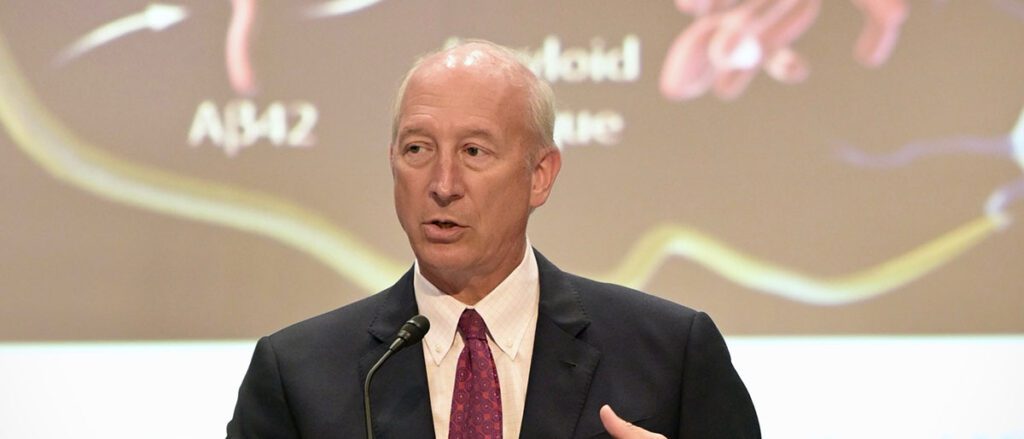
To illustrate the need for a robust research agenda, Dr. Holtzman described how researchers found that T cells proliferated in the brains of mice with Alzheimer’s pathology. Removing those T cells from mice at the onset of neurodegeneration produced marked protection against further brain damage. “More research is needed to determine whether currently approved therapies for autoimmune diseases or cancer that target the immune system might be safe and effective for Alzheimer’s disease,” Dr. Holtzman concluded. “It is likely that novel immune-based therapeutics will also be needed.”
Correlations worthy of further study
Dr. Kaech opened her remarks by acknowledging that the advances in immunotherapy for Alzheimer’s disease are “an achievement, but they’re also a beginning. They tell us that it can be targeted, but we need to understand more about the drivers of the disease.” Current immunotherapies can slow the progression of Alzheimer’s but do not stop it or reverse the damage that has already been done. Better understanding of how the immune system interacts with the disease can lead to more effective therapies.
One of the pathways to better understanding is in the role infection plays in Alzheimer’s disease. Dr. Kaech showed data indicating a strong correlation between infections such as shingles, sepsis, and influenza, especially when the patient is over 80, and increased incidence of Alzheimer’s. These associations raise “a really important biological question: What happens to the brain during these major immune events? Does inflammation change the brain’s immune cells?”
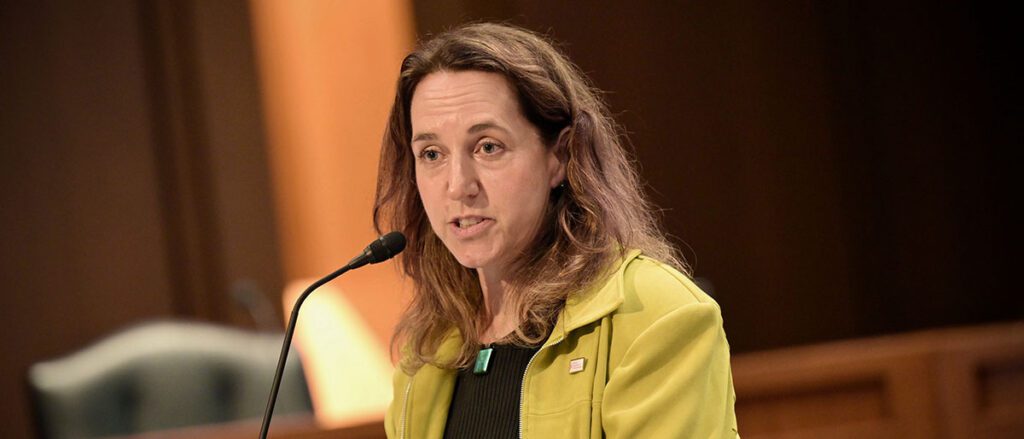
Dr. Kaech clarified that while these correlations do not prove that the infections cause Alzheimer’s disease, “they are providing us with a really interesting set of clues.” Vaccination might be “simply preventing the reactivation of these viruses that could lead to subsequent inflammation and disease,” or it could be “changing and training the immune system in a way that makes the aging brain more resilient.” If the shingles virus we already have can also elicit protection against neural degeneration, it is imperative that the mechanism is understood.
Dr. Kaech left the audience with three main takeaways for future Alzheimer’s disease research. “First, we need to understand it, to discover how immune cells communicate with the brain and how that communication changes with aging, infection, genetics and disease. Second, we need to measure it, to develop a brain immune health score that connects immune health with brain health and dementia risk. And third, we need to manipulate it, to translate this knowledge into new ways to harness the immune system to protect the brain and prevent neurodegenerations.”
The patient experience
The briefing’s final speaker, Sean Terwilliger, related the story of his struggle with early-onset Alzheimer’s disease and the challenges of even getting a proper diagnosis. In 2018, he had a transient ischemic attack (TIA), or mini-stroke, and began noticing signs of cognitive degeneration. It took four years, three insurance companies, and four primary care doctors, before he could get a basic neuropsychology test for initial diagnosis.
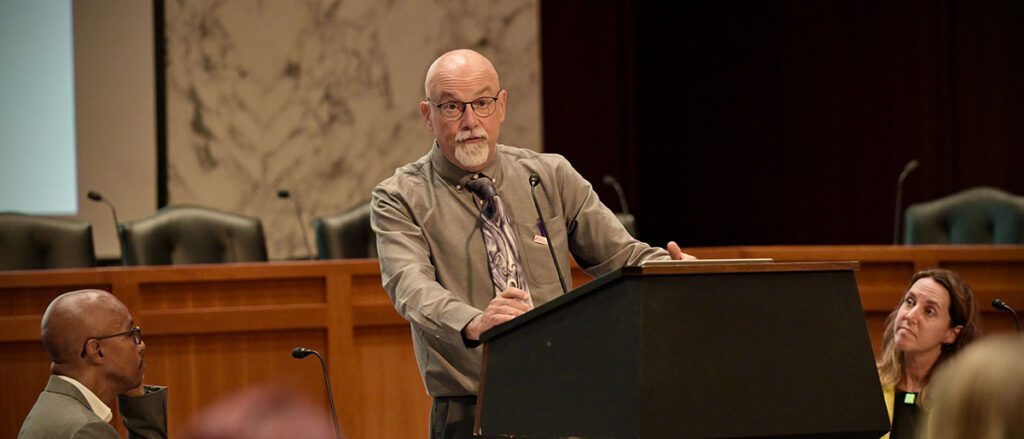
Once Terwilliger’s Alzheimer’s disease diagnosis was confirmed with a PET scan, he began twice-a-month infusions of lecanemab, an anti-amyloid monoclonal antibody. That didn’t stop him from wanting to learn more. As he was already on the gold-standard treatment, he began participating in non-drug clinical trials that would not conflict with his therapy.
After the recommended 18 months on lecanemab, Terwilliger was tested with a newly-approved blood test that measures the ratio of pTau217 and ß-Amyloid 1-42. The result was favorable enough that he decided not to continue periodic infusions. Instead, he is participating in novel drug trials, hoping to be part of an eventual cure.
Next steps
The briefing concluded with a short question and answer period. Audience members wanted to know the next steps in Alzheimer’s research, including what is needed from Congress to ensure that news discoveries are possible. Dr. Kaech answered that increased grant funding for NIH, especially through NIA and NIAID needs to be a priority. Dr. Holtzman recommended wider patient access to easy diagnostic tests so that treatment can begin earlier in the disease’s progression.
Attendees at the briefing provided very positive feedback, with one calling it an “incredible panel.”