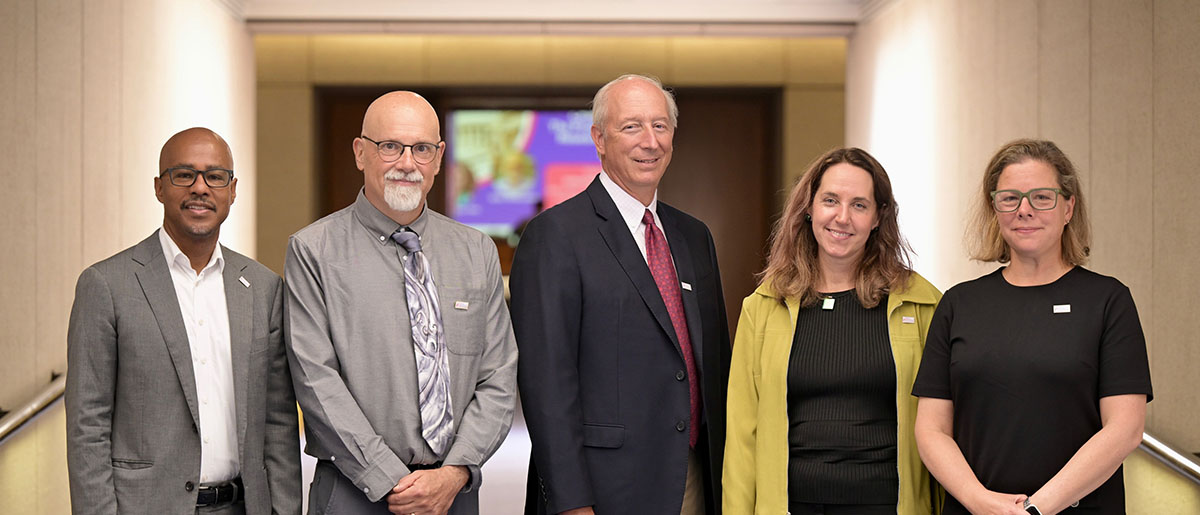
Ulrich H. von Andrian, MD, President of the American Association of Immunologists (AAI), responds to the House Appropriations Committee’s markup of the fiscal year (FY) 2027 Labor, Health and Human Services, Education, and Related Agencies appropriations bill, which proposes a modest increase of $100 million for the National Institutes of Health (NIH) and $18.5 million for the National Institute of Allergy and Infectious Diseases (NIAID):
Congress has a responsibility to keep the United States at the forefront of biomedical innovation, but that requires sustained and meaningful investment in NIH. While AAI appreciates that the Committee has recommended increased funding for NIH in a difficult funding environment, the Committee’s bill fails to provide the resources needed to sustain U.S. leadership in biomedical research.
Every dollar invested in NIH research represents a chance to save lives, advance science, and support American jobs. When funding falls short, it means delayed cures, lost opportunities, and a generation of young scientists forced to reconsider their future in research.
Breakthroughs made possible by NIH-funded research are continually transforming patient care. For example, a recently FDA-approved immunotherapy for bladder cancer—the first new treatment option for certain patients in more than 30 years—builds on decades of research into how the immune system can be harnessed to fight disease. Continued investment is essential to ensure that discoveries like these can move from the laboratory to the clinic and reach the patients who need them.
At a moment when biomedical research is delivering transformative advances in immunology—powering breakthroughs in cancer immunotherapy, vaccines, and treatments for autoimmune and infectious diseases—now is not the time to slow progress.
NIH funding is a proven engine for innovation and economic growth, supporting jobs and research institutions in every state and nearly every congressional district. Investments in NIH-supported research generate substantial returns, fueling more than 390,000 jobs nationwide and producing an estimated $2.57 in economic activity for every $1 invested, translating to a return on investment of more than 250%. Sustained investment is also essential to ensure that early-career scientists have the stability needed to pursue groundbreaking research and remain in the field.
AAI urges Senate appropriators, and Congress as a whole, to build on bipartisan support for NIH seen in previous years and provide no less than $51.3 billion for the NIH base budget and $7.15 billion for the National Institute of Allergy and Infectious Diseases in FY 2027.