To attend the free screening of The Endless Frontier on December 9 in Washington, DC, please register here. Registration is required for this in-person–only event
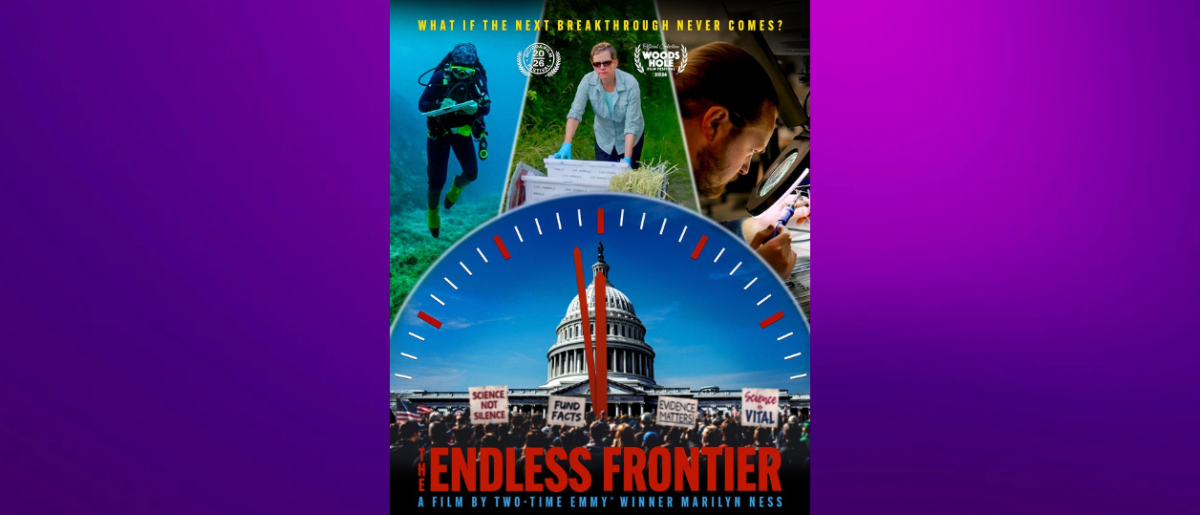
Scientists in every field are all too aware of the threats posed to the research endeavor by funding cuts and public distrust in science. AAI Member Shruti Naik, PhD, has helped bring their stories to life through The Endless Frontier, a new documentary film that profiles three scientists working to solve some of the most pressing challenges of our time, while demonstrating the critical importance of a healthy and supported research enterprise.
In the closing months of World War II, the Director of the Office of Scientififc Research and Development, Vannevar Bush, delivered a report called Science: The Endless Frontier to President Harry Truman. In this landmark document, Bush wrote, “New products and new processes do not appear full-grown. They are founded on new principles and new conceptions, which in turn are painstakingly developed by research in the purest realms of science!” Now, The Endless Frontier is illustrating this fundamental truth about the role of research.
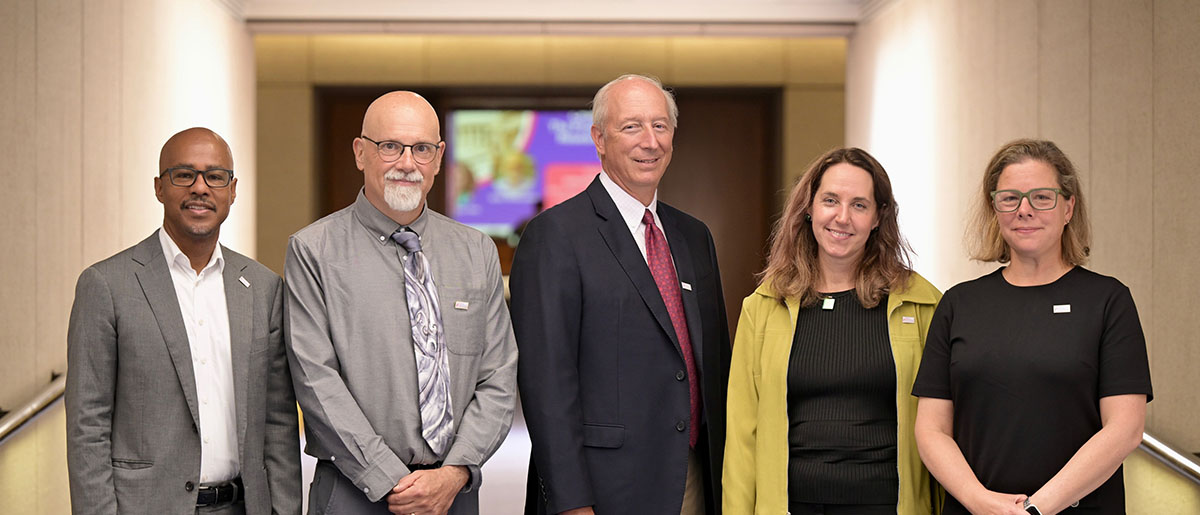
AAI is proud to host a screening of The Endless Frontier at the Capitol Visitor Center in Washington, DC, on Wednesday, December 9, 2026, 5:00–7:00 PM. The film will be followed by a Q&A, with the director Marilyn Ness, Dr. Naik, AAI President Avery August, PhD, and Andrea Graham, PhD. Executive producer Aaron Mertz, PhD, will moderate.
Dr. Naik is no stranger to the fight for science funding. As one of the organizers of NY-CURES, the New York Coalition for Unified Research and Education in Science, she has been deeply involved in the effort to maintain research stability in the face of cuts to federal funding. We spoke to her about the making of The Endless Frontier.
What was your path from the lab to film production?
Aaron Mertz, Director of the Aspen Institute Science and Society Program, and I developed the idea for The Endless Frontier after witnessing the distrust of science during the COVID-19 pandemic. On a trip to Ghana, many people asked us whether the virus was real. Some asked why a vaccine had taken so long to develop, while others wondered how they could trust a medicine that was so new. Those conversations suggested that distrust also grew from a lack of familiarity with how science works and the people behind it.
We wanted to bring audiences into scientists’ lives, allowing them to see the creativity, uncertainty, and persistence that discovery requires. We brought our idea to Consequential and worked with an extraordinary filmmaking team led by two-time Emmy winning director Marilyn Ness.
What is your role as an executive producer?
As an ideator and executive producer, I helped bring that vision to life and now help the film reach audiences through screenings like this one. Our ambition is to build human connections between scientists and the communities we serve, creating a foundation for greater understanding and trust.
What can immunologists learn from the other two scientists featured in the film?
Paul Barber, a marine biologist at UCLA, reminds us that nurturing scientific talent is inseparable from advancing discovery. His commitment to opening research opportunities to students from underrepresented backgrounds asks us to consider whose curiosity gets a chance to become a career. Jacob George, a neurorobotics researcher at the University of Utah, brings engineering and neuroscience together to help restore movement and sensation. His work illustrates what becomes possible when we follow a problem across disciplinary boundaries, keeping the people who might benefit firmly in view.
How are their stories and experiences as scientists connected?
Alongside immunologist Andrea Graham, their stories reveal a shared experience: the excitement of a question, the vulnerability of pursuing an uncertain answer, and the responsibility of training others while sustaining a research program. Immunologists will recognize themselves in those experiences. For me, the film also makes a larger point: our fields share a dependence on public trust and sustained investment. We have a common stake in protecting the conditions that allow discovery to flourish.
When someone unfamiliar with the realities of a career in science watches the film, what do you hope they walk away understanding?
I hope audiences leave understanding that people power discovery. While researching the film, we asked people in Times Square, “Where do your medicines come from?” Answers included plants, CVS, and Pfizer. Those responses captured familiar sources of medicines while leaving out the years of investigation and the people whose work made those treatments possible.
A scientist’s working life begins where the answers in our textbooks end. It requires imagination, patience, and the willingness to revise what we believe when evidence surprises us. The film makes that experience human, revealing the hopes, disappointments, and responsibilities that accompany the pursuit of knowledge.
At a time when AI is being lauded as the solution to all of biology’s problems, we must remember the people who make its promise possible. We need scientists to generate reliable data, bring creativity to unanswered questions, and design and carry out experiments that test new ideas. Without people to sustain that work, AI will be impotent.
We must invest in America’s scientific workforce. When a scientist leaves research, we lose hard-earned expertise, a mentor for future generations, and discoveries that may never be made. I hope viewers recognize that supporting the people who do science is an investment in their own families, communities, and futures.
If you would like to host a screening of The Endless Frontier at your institution and invite your community, please contact Consequential through the film’s contact page. The filmmakers would love to help you bring this conversation to your community.