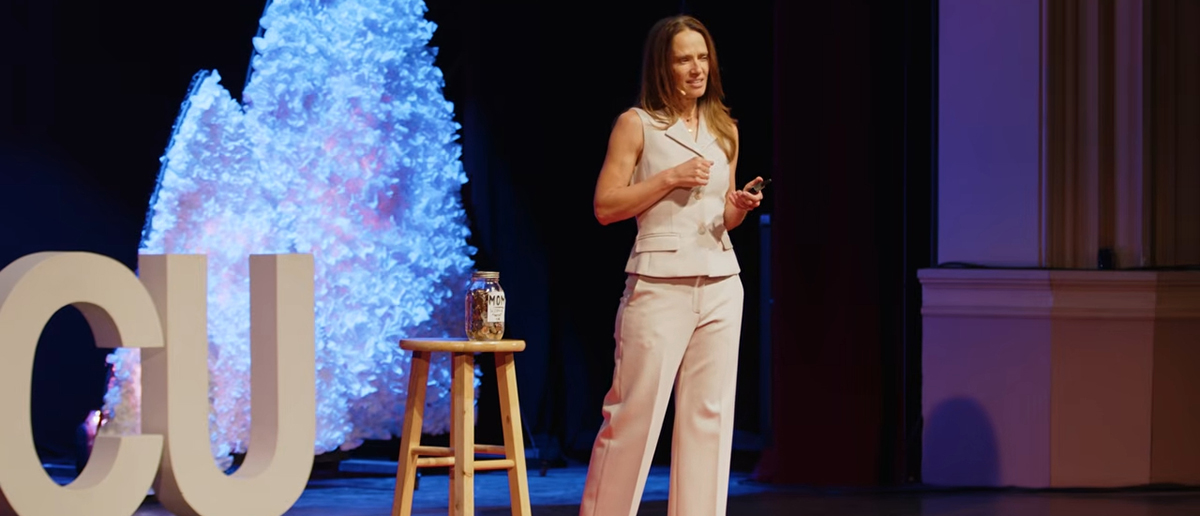

At IMMUNOLOGY2026™, the AAI Council and Minority Affairs Committee were pleased to present Dr. Curtis J. Henry the 2026 Vanguard Award in recognition of research achievement and exemplary career success. Dr. Henry is the Deputy Associate Director of Faculty and Staff Relations for the CU Cancer Center, an Associate Professor in the Department of Immunology & Microbiology at University of Colorado, Anschutz Medical Campus and The David F. and Margaret Turley Grohne Endowed Chair in Translational Cancer Research.
AAI News & Views sat down with Dr. Henry to discuss his career, passion for mentorship, and more.
What does receiving the Vanguard Award mean to you?
This is a watershed moment for me. As a grad student, the first conference I ever attended was IMMUNOLOGY2005™. Attending AAI annual meetings helped me see how approachable everyone in the immunology field is and how much they want to support the next generation as we try to be pioneers in our own right. Witnessing that ‘pay it forward’ mentality became a part of who I am as a mentor, so receiving the Vanguard Award is a full circle moment to show the people who poured into me that I did something with those efforts.
How has AAI helped you in your career as an immunologist?
The biggest thing AAI has done for me is keep me passionate and motivated about science. When I come to a meeting with thousands of people from around the world working on groundbreaking research and get to exchange ideas and foster collaborations, it invigorates me to keep moving forward. The inspirational piece of this meeting is monumental. The mentorship, collaboration, and lifelong friendships that I’m able to establish here, in a field that can be very challenging at times, has been truly enjoyable.
What is something that has surprised you about your career so far?
The biggest surprise is the breadth of science that I’ve been able to do. Our research interests are really diverse. We’ve been able to take the immunology foundation that I’ve built and the strengths of the people that I have the privilege of working with and explore areas from obesity to aging to biophysical structures of immune cells. We can pursue whatever questions that comes up and that is interesting to our team.
What hopes do you have for the future of immunology?
The biggest thing I would like to see happen for immunology is for the public to truly understand what we do. I want scientists to be proactive and connect with everyone in society, so the public can appreciate how much we love our careers, how hard we work, and how much this research impacts their daily lives. I’m from a small town in South Carolina where people believe in getting to know their neighbors, so I would love to see scientists have a better relationship with the overall community and for people to trust and support our work.
What advice do you have finding mentors and on being a mentor?
If you’re looking for mentors, I think that a main focus should be on how a potential mentor will treat and support you while training in their lab and after you leave. A common approach is for mentees to look for mentors with similar research interest; however, mentees should consider diversifying their training because your research interest may evolve as you mature. So, having someone who’s going to advocate for you, be patient with you, provide you with candid feedback in a loving way, makes for the best mentors. Mentors with these values truly really care about you succeeding and they’re going to mentor you in a way which builds you up, not break you down.
When being a mentor, you can’t take a one size fits all approach to mentorship. You must know each person’s strengths and areas of growth and tailor your mentoring experience to each person, adapting as they advance through their career. Your mentorship style should be a sliding scale. You should also establish a sincere connection with each of your mentees. For example, please ask them how they are doing before you start scientific discussions, make sure they are in the right headspace to have high-level conversations and if not, provide them with the space to deal with the things happening outside of science.