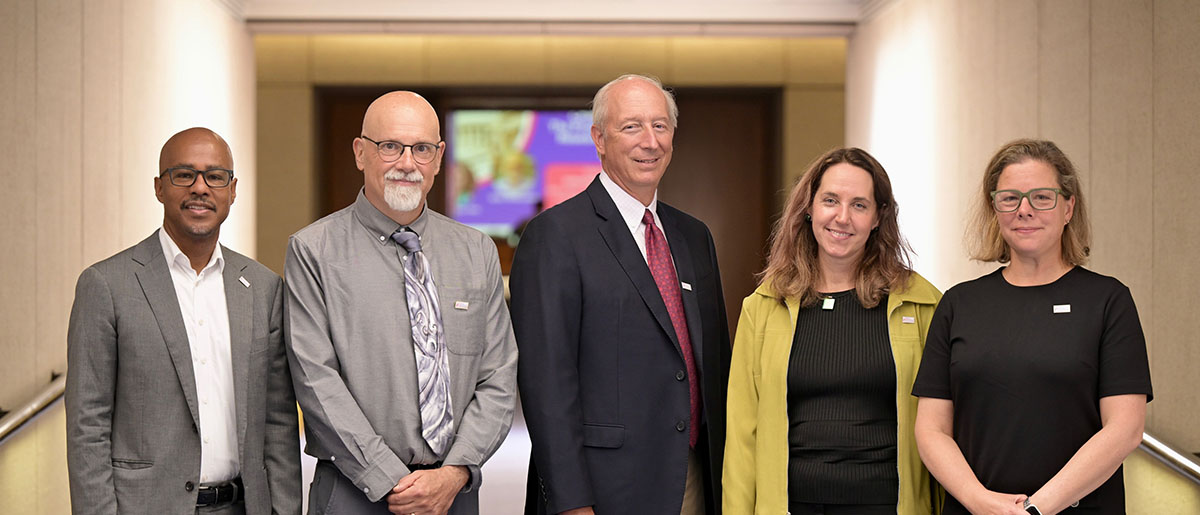
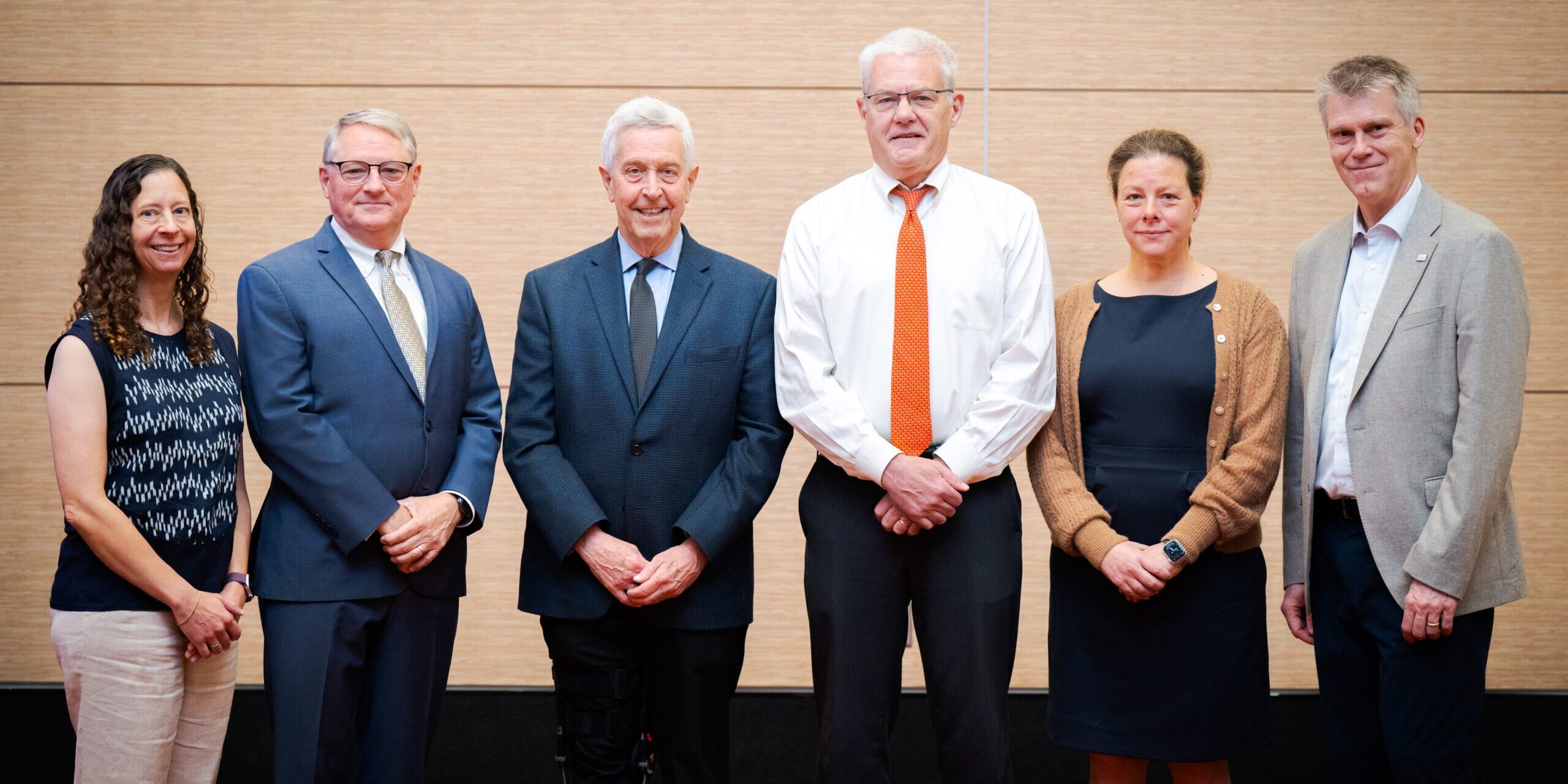
Vaccination is one of the most effective public health interventions, saving more than 150 million lives over the past 50 years. Yet, the policy environment and public perception surrounding the safety and recommended use of vaccines is becoming increasingly complex. As part of AAI’s unwavering commitment to advance evidence-based vaccine policies, the AAI Committee on Public Affairs (CPA) convened a panel of speakers at IMMUNOLOGY2026™ to discuss the future of vaccine policy in the United States, co-chaired by AAI CPA Chair Dr. Lauren Ehrlich and CPA Vice Chair Dr. Marion Pepper.
The History of Pediatric Vaccine Recommendations
Dr. James Campbell, Incoming Chair, Committee on Infectious Diseases, American Academy of Pediatrics (AAP), opened by outlining AAP’s century-long role in developing pediatric immunization guidance. Alongside this, Dr. Campbell outlined how the CDC Advisory Committee on Immunization Practices (ACIP) has traditionally worked alongside professional societies through intensive, multi-year workgroups to evaluate vaccine safety, effectiveness, and implementation.
Now, for the first time in 31 years, the AAP pediatric vaccine recommendations do not align with the CDC’s, a move AAP made in response to recent federal actions that deviated from evidence-based practices. To further ensure evidence-based decisions are available to the public, AAP is bolstering its own evidence-review infrastructure, with expert subgroups evaluating vaccines like HPV, RSV, COVID‑19, and influenza to ensure recommendations remain science-driven.
Ensuring Evidence is Available
Next, Dr. Bruce Gellin, consultant for the Vaccine Integrity Project (VIP) and former deputy assistant secretary for health and director of the National Vaccine Program Office at the US Department of Health and Human Services, outlined how VIP is ensuring that evidence-based information on vaccines remains widely available. VIP was created by experts who anticipated federal actions that would affect vaccine policy, access, and safety oversight. VIP conducts independent, transparent evidence reviews to support medical societies and states as they make vaccine policy decisions. These reviews follow the same “evidence-to-recommendation” framework once central to ACIP, weighing benefits, risks, equity, feasibility, and public values.
So far, VIP has completed evidence reviews for the 2025-2026 respiratory season and birth-dose hepatitis B. In anticipation of future needs, they are working on evidence reviews of the HPV vaccine, Tdap vaccination during pregnancy, and the 2026-2027 respiratory season. As part of VIP’s effort to maintain transparency, reviews include interactive tools outlining the data used in the review and sources from other medical societies.
Rebuilding Trust in Public Health
Dr. Daniel Jernigan, former Director of the CDC National Center for Emerging and Zoonotic Infectious Diseases, wrapped up the panel presentations by sharing how public health can move forward and what it will take to rebuild trust. Dr. Jernigan emphasized that while the vaccine ecosystem has taken hits from all angles, trust can still be rebuilt.
While public trust has fallen for federal health agencies, it has remained relatively stable for individual scientists. Rebuilding trust, Jernigan argued, requires honesty about uncertainty, showing independence from politics, genuine dialogue with communities, and more diverse, relatable scientific voices. Jernigan emphasized the future of public health depends on people understanding the science that impacts their lives. If public health can pair rigor with trust, and preparedness with community partnership, it could emerge from this current climate not just rebuilt, but stronger, Jernigan concluded.
AAI’s Role in Vaccine Advocacy
The session emphasized that scientific and medical communities cannot waver in their commitment to working with Congress and the Administration to advance evidence-based vaccine policies.
As part of its advocacy efforts, AAI recently released its latest Position Statement on vaccine policy, a document largely geared toward Congress and federal scientific agencies. The Position Statement describes the impact of vaccines on public health, highlights key scientific questions to be addressed, and outlines policy recommendations.
AAI also filed an amicus brief this year in support of AAP and other plaintiffs in AAP vs. RFK Jr. These briefs give organizations like AAI the opportunity to provide additional expert perspectives. AAI’s brief was cited this March in the U.S. District Court judge’s decision that paused many of the recent changes that have been made to vaccine policy and temporarily disbanded the CDC’s recently appointed ACIP.
To learn more about AAI’s advocacy efforts visit: www.aai.org/Public-Affairs
Photo by Abby Greenawalt