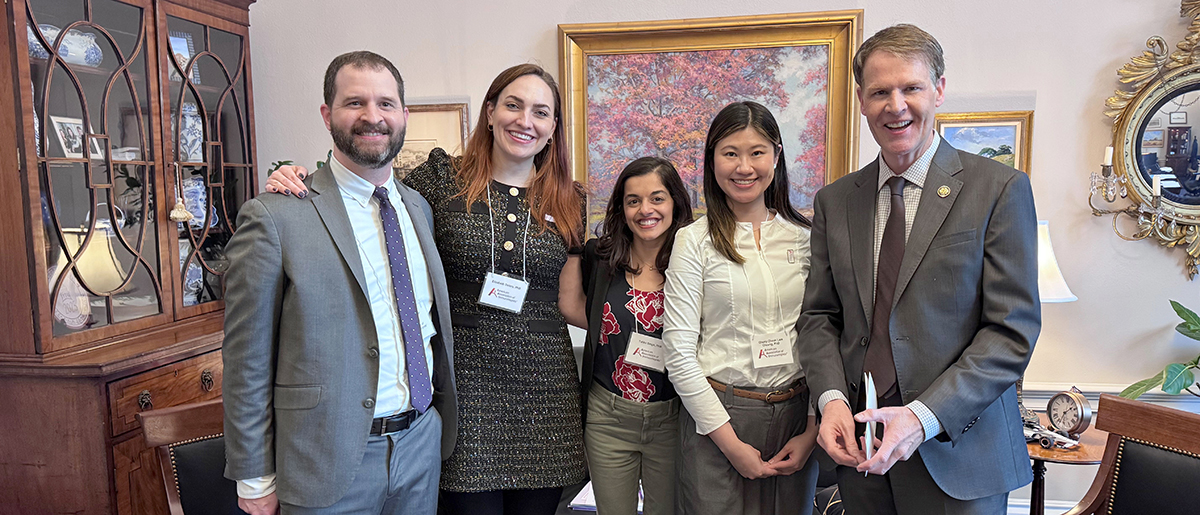
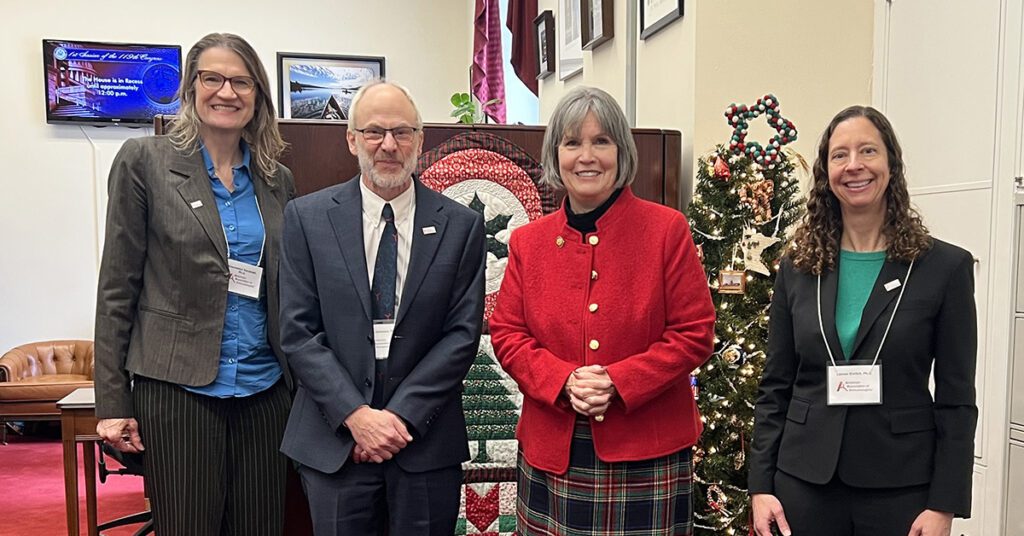
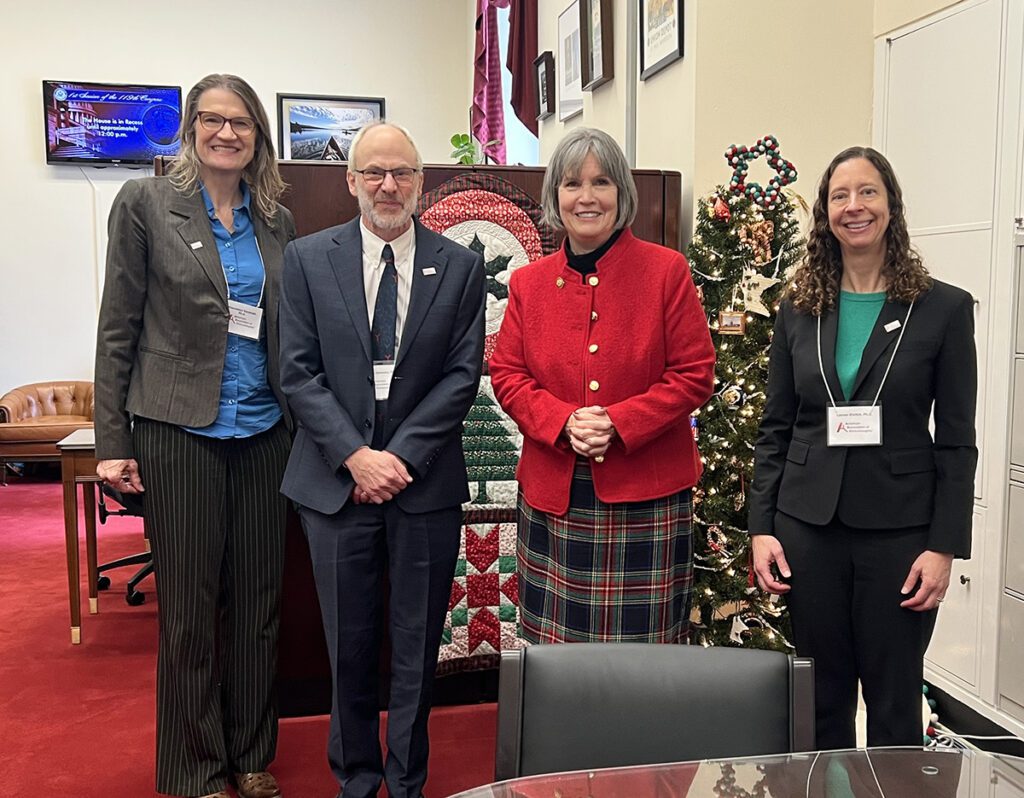
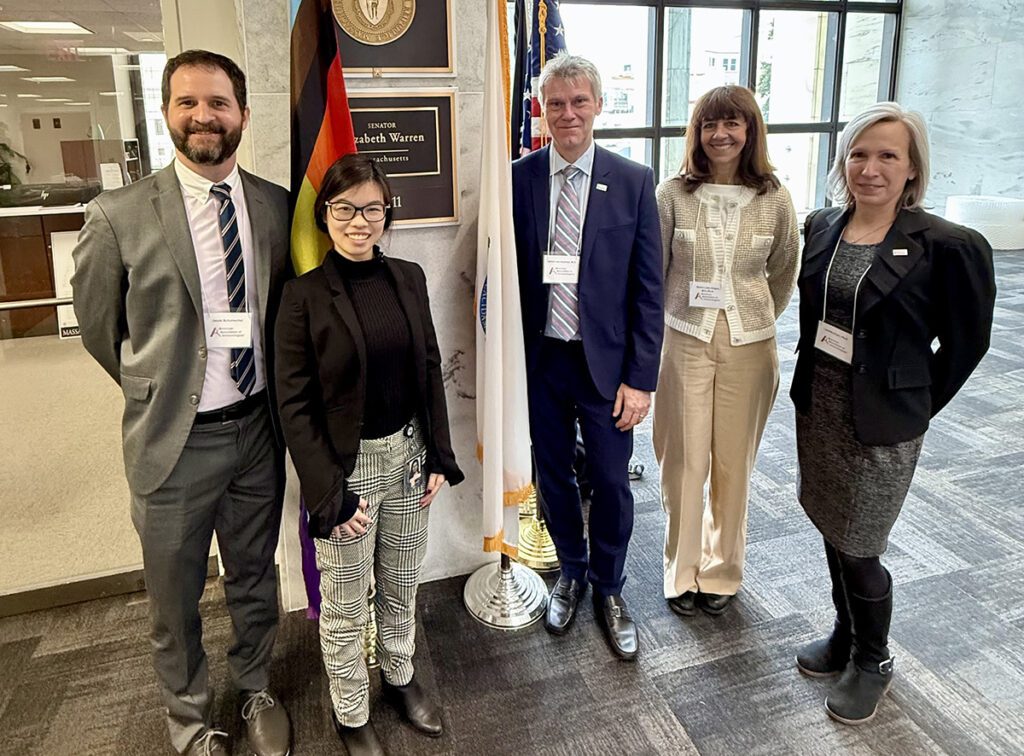
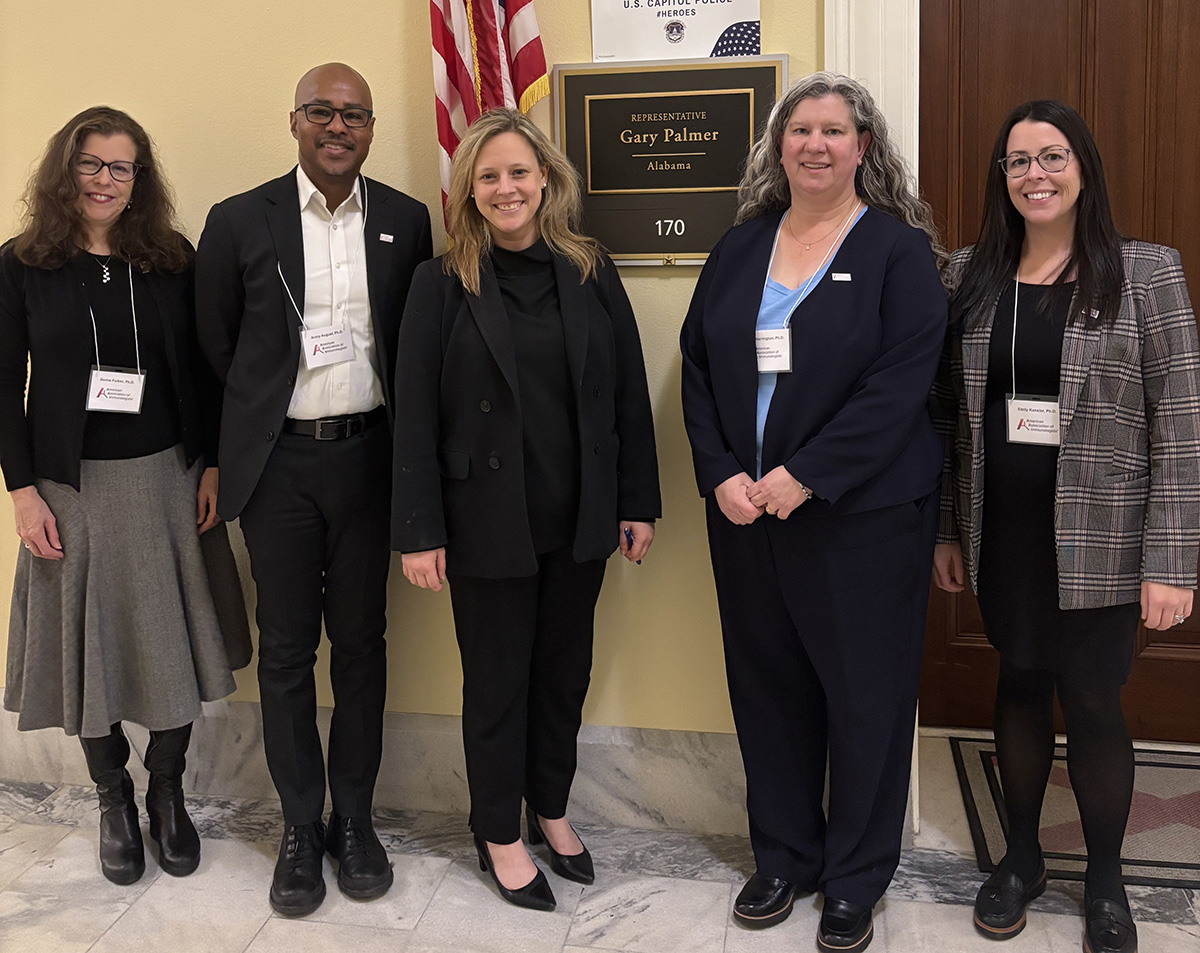
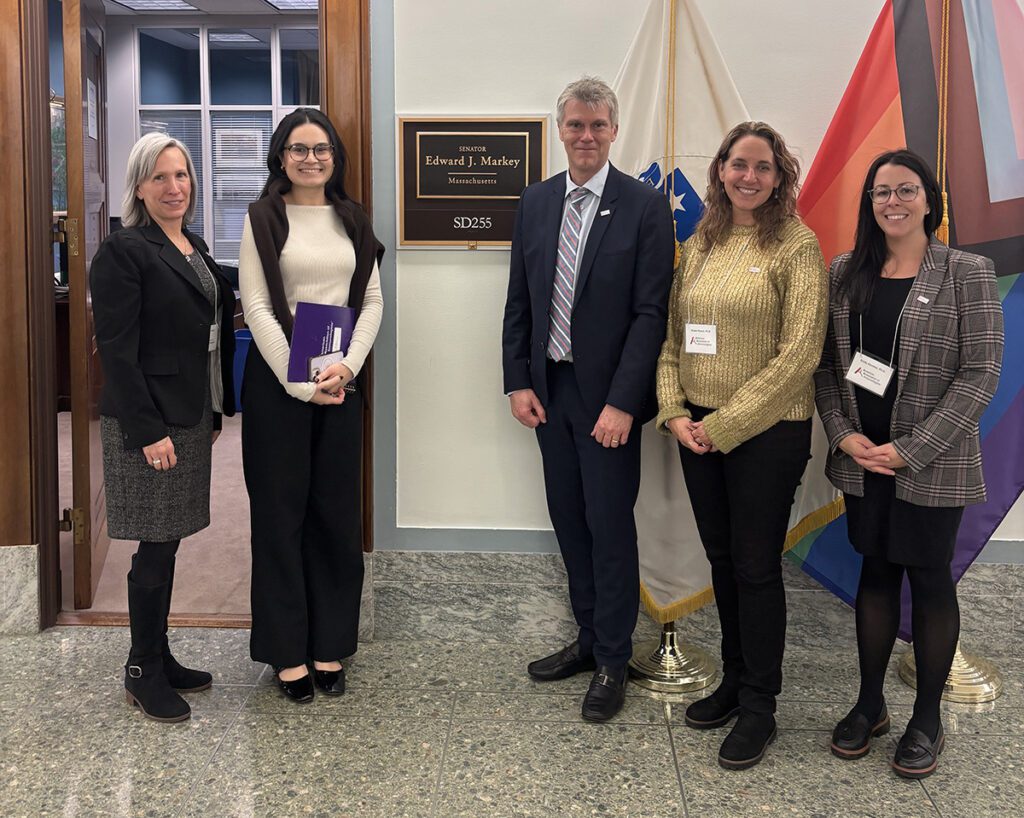
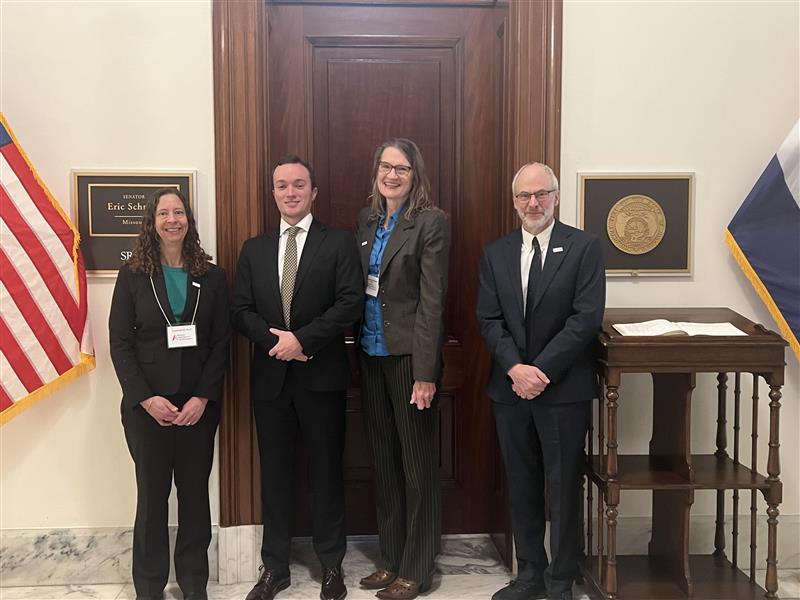
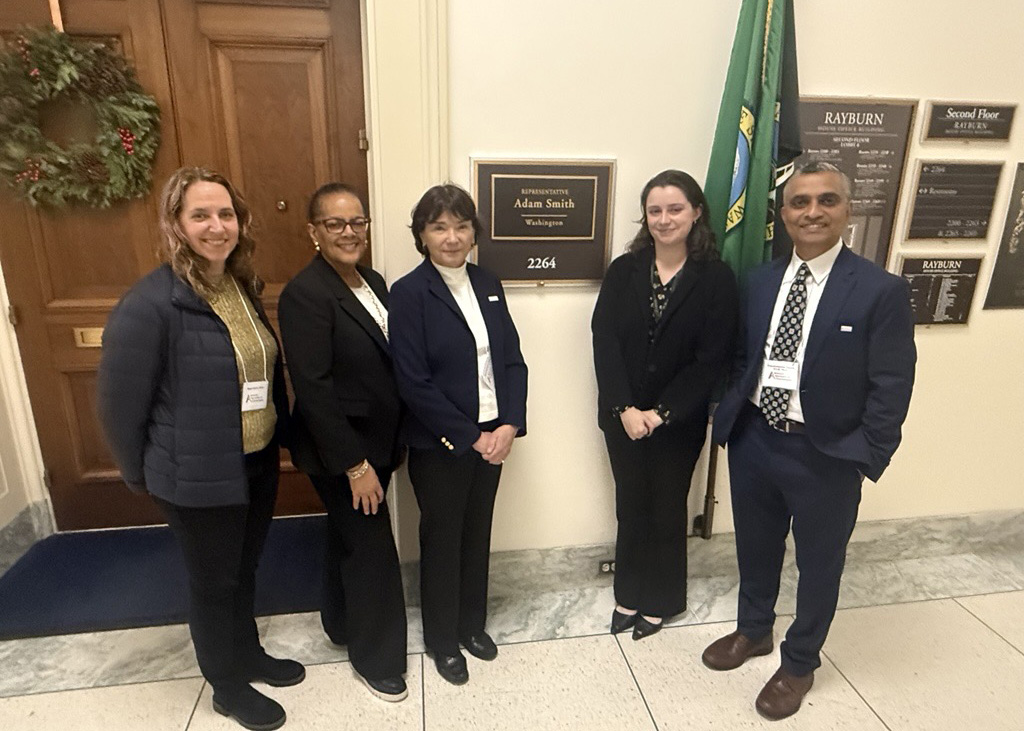
On December 10, the AAI Council visited Washington, D.C. to advocate for robust funding for the National Institutes of Health (NIH), to recommend further inquiry into recent NIH policy changes and actions, and to urge Members of Congress to fight for evidence-based vaccine policy. AAI Council Hill Day attendees participated in 28 congressional meetings across nine states.
NIH Funding Recommendations
In productive meetings with both Democratic and Republican offices, Capitol Hill Day attendees thanked Members of Congress for their bipartisan support for NIH as evidenced by the sharp rejection of President Trump’s fiscal year (FY) 2026 budget request, which called for a 40% reduction to the NIH budget, in the Senate and House Appropriations Committee bills. During Hill Day, Councilors specifically recommended that Congress provide $51.3 billion for NIH, including $7.29 billion for the National Institute of Allergy and Infectious Diseases, in its final appropriations bill for fiscal year (FY) 2026. However, given the current fiscal environment, Councilors also expressed great appreciation for the $400 million increase for NIH already approved by the Senate Appropriations Committee on a bipartisan basis, and urged all offices to view this as a floor for NIH funding in FY 2026
Multi-year Funding Policy
In addition, participants spoke with their Members of Congress about NIH’s increased use of multi-year funding (a mechanism used to fully fund projects at the start of the project, rather than allocating funds over separate budget years). While used extensively by NIH in FY 2025 to ensure appropriated funds were expended before the end of the fiscal year, its use resulted in significantly fewer funded investigators in FY 2025. NIH has proposed increasing its use of multi-year funding to 50% of all competing research grants. Without a dramatic increase in the NIH budget, this funding approach is not sustainable and would result in a significant short-term reduction in the total number of NIH supported investigators. AAI Councilors urged Congress to support language included in the Senate Appropriations Committee bill that limits NIH’s ability to use multi-year funding in FY 2026.
Oversight Requested
Councilors also discussed the damage and uncertainty caused by changes and disruptions to NIH practices and policies, including extensive grant cancellations, peer review delays, and the elimination of paylines. During the meeting, they encouraged Members of Congress to ask the House and Senate authorizing committees (House Energy and Commerce and Senate Health, Education, Labor, and Pensions) to conduct oversight hearings to shed light on these consequential actions and determine where Congressional intervention may be required.
Vaccine Policy Concerns
Finally, Capitol Hill Day attendees asked Congress to help ensure that federal vaccine policy is rooted in science and evidence. They expressed AAI’s deep concern about recent changes to vaccine policy, including the recommendation made by the Centers for Disease Control (CDC) and Prevention’s Advisory Committee on Immunization Practices (ACIP) to change the guidance for hepatitis B vaccination of infants. AAI issued a statement articulating its concern with the policy changes on December 5. Acting CDC Director Jim O’Neill has since accepted the ACIP’s recommendation.
Hill Day participants included: AAI President Ulrich von Andrian, M.D.; AAI Vice President Avery August, Ph.D.; AAI Past President Stephen Jameson, Ph.D.; AAI Secretary-Treasurer Joan Governman, Ph.D.; AAI Councilors Maria-Luisa Alegre, M.D., Ph.D., Donna Farber, Ph.D., Susan Kaech, Ph.D., and Gwendalyn Randolph, Ph.D.; ex officio Councilors Laurie Harrington, Ph.D., Chandrashekhar Pasare, D.V.M., Ph.D. and Loretta Doan, Ph.D.; and Committee on Public Affairs Chair Lauren Ehrlich, Ph.D, along with several members of the AAI staff.