Hepatitis B virus (HBV) is a human-specific virus that can cause both acute and chronic infection of the liver, which may lead to cirrhosis and liver cancer. In 2022, there were an estimated 254 million people were living with chronic hepatitis B infection, 1.2 million new infections, and 1.1 million deaths due to hepatitis B across the globe.
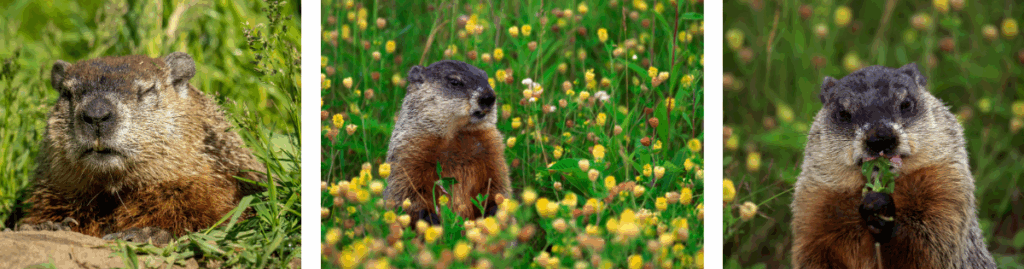
As a human-specific virus, it is challenging to study hepatitis B infection in traditional animal models. However, the North American woodchuck (or groundhog) with woodchuck hepatitis virus (WHV) as a nontraditional animal model has significantly contributed to our understanding of HBV.
To learn about the importance of nontraditional animal models, AAI News & Views talked with Dr. Tomasz I. Michalak, Professor Emeritus, Faculty of Medicine at Memorial University of Newfoundland, who spent most of his career studying the woodchuck-WHV model. More details about how the woodchuck-WHV model has advanced our understanding of HBV can be found in The Journal of Immunology.
Why are woodchucks being used to study a human disease?
Given the burden of Hepatitis B infection around the world, having an animal model that mimics infection in people to study Hepatitis B virus is critical. Woodchucks from the northeastern part of North America are the natural hosts of WHV, which closely resembles HBV. WHV causes hepatitis that, like in humans, can progress from acute to chronic hepatitis and culminate in liver cancer. WHV can also establish persistent asymptomatic infection that leads to cancer, as in humans. The main route of human HBV transmission in endemic areas is from mothers to babies, which is also observed in WHV infection from woodchuck dams to their offspring. Given the similarities between these two infections, the woodchuck-WHV model is the most valuable immunopathogenic model of hepatitis B currently available.
How has research using the woodchuck model improved our understanding of HBV and, therefore, outcomes for people with hepatitis B infection?
The woodchuck-WHV model has impacted four key areas of our understanding of Hepatitis B virus:
- Elucidation of the natural history of HBV infection
- Characterization of the pathobiological properties of HBV
- Identification of profiles of virus-triggered innate and adaptive humoral and cellular immune responses during the entire infection
- Contributions to the identification and preclinical testing of agents acting directly against HBV and the assessment of clinical suitability of potential immunotherapies against chronic hepatitis B infection.
The woodchuck-WHV model continues to contribute to new therapies aimed at HBV elimination and cancer treatments, as researchers also search for more effective methods to stop HBV replication and inhibit its progression.
How did you first come across the woodchuck model for HBV? How did you develop the model over your research career?
I became interested in the immunopathogenesis of hepatitis B and HBV-caused extrahepatic diseases from the beginning of my medical career when I joined the Department of Immunopathology, headed by Dr. Adam Nowoslawski, at the National Institute of Hygiene in Warsaw, Poland. Later, when I moved to Canada, I wanted to continue research in this field that I found highly exciting, but clinical studies were very sparse in my area. I started a search for animal models of HBV infection and found that the HBV-compatible infection naturally occurring in North American woodchucks appeared to be the closest fit.
I contacted Dr. Robert Snyder, a chief veterinarian and a director of the Penrose Research Laboratory at the Philadelphia Zoological Garden, where chronic hepatitis and liver cancer were for the first time being noticed in wild-caught woodchucks. WHV was soon discovered by Dr. Jesse Summers and his colleagues from the Fox Chase Cancer Center. I traveled to the Garden to become familiar with woodchucks and their care. A few months later, I started my own research colony at the Memorial University of Newfoundland, Canada. My sabbatical in Dr. Francis Chisari laboratory at the Scrips Research Institute in La Jolla, California was instrumental in adaptation of advanced molecular and immunological techniques used to study HBV to the woodchuck experimental system.
The colony, ongoing for 35 years, successfully contributed to the development and application of basic research, antivirals, and to recognition of potential immunotherapies. Studies applying the woodchuck-WHV model are continuing in laboratories of my former students, now academic professors at leading Canadian universities and medical schools.
In the future, what questions do you hope this animal model will help answer?
Although very significant progress has been made, there are many aspects of HBV pathobiology, immunopathology, oncogenesis, and therapy requiring further studies. My hope is that we can fully identify the nature and pathobiological consequences of Hepatitis B and other hepadnaviruses on immune cells. I would also like to see the model used to elucidate the contribution of HBV residing in the immune system to the pathogenesis of liver injury, reactivation of occult HBV infection, and the development of HBV therapeutic vaccination for patients whose reactivation of hepatitis B is expected.
The woodchuck-WHV model is also excellent for studies on hepadnavirus-initiated processes that lead to cancer in the absence of liver inflammation. I hope the continued utilization of the model in this difficult study area will unveil molecular principles of hepadnaviral carcinogenicity and potential targets for interventions to block this process. Overall, I hope the model will continue to address the global burden of HBV.
What is the importance of nontraditional animal models to human health?
While traditional animal models are very important, they have have limitations when it comes to some viruses of public health importance. Human-restricted viruses utilize human or cell type specific receptors to infect the body. Studying these diseases becomes more complicated when the human immune system is the main driver of injury, as is the case of chronic Hepatitis B infection, or if a virus only infects cells of the human immune system. Replicating these layered and complex interactions in a traditional animal model is a great challenge. Therefore, when a nontraditional animal model of a highly impactful human disease can be identified, it should be promoted and explored. Nontraditional models offer the most direct approach to benefit suffering patients, as has been demonstrated by the woodchuck-WHV experimental system.
To learn more about the role of nontraditional animal models, explore The Journal of Immunology’s special collection titled “Beyond the Mouse: Nontraditional Animal Models in Immunology.”
The Journal of Immunology (The JI), published by the American Association of Immunologists is one of the most highly cited journals in the field of immunology. The JI is committed to describing novel findings in all areas of experimental immunology, including basic and clinical studies.